Homo rhodesiensis
| A video about Homo rhodesiensis |

|
EUGENE M. MCCARTHY, PHD
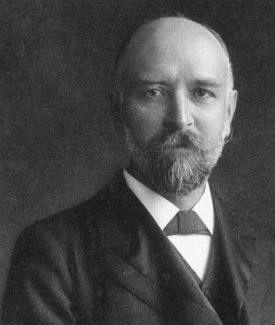
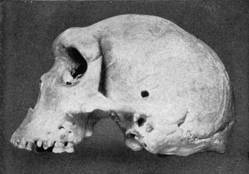
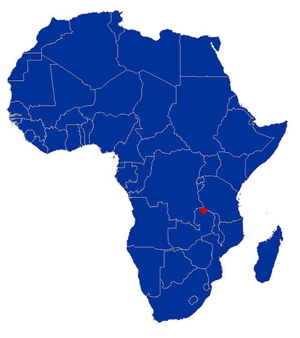
Homo rhodesiensis ("Rhodesian Man" or "Broken Hill Man") was based on a fairly complete cranium, known as the Kabwe Skull or Broken Hill 1, of a large-brained individual found in a mine at Broken Hill (now Kabwe), in northern Rhodesia (now Zambia) by Swiss miner Tom Zwiglaar in 1921. The specimen was first described by Arthur Smith Woodward (Woodward 1921), the palaeontologist who is one of the chief suspects in the perpetration of the Piltdown Man hoax.
Even if Woodward's now tainted reputation is left out of consideration, the validity of H. rhodesiensis as a distinct type of hominid is not well accepted. It has been variously suggested that the skull on which it is based should be assigned to one or the other of H. erectus, H. neanderthalensis, H. sapiens, or H. heidelbergensis.
Moreover, the age of the cranium is rather uncertain. Samples from the skull cannot be used to obtain an exact radiometric date and the site within the mine where the skull was found is now flooded. It is believed to be of Late Pleistocene age (between 120,000 and 300,000 years years old). But this doesn't narrow things down particularly much.
A great deal of speculation on this topic has led nowhere. No one really knows what the true significance of this skull might be, or even how old it is. All that anyone can say for sure is that Homo rhodesiensis is a clear example of a caveman of uncertain age and status.
Perhaps we are not from the apes alone?
|
| Etymology: The Latin word homo means "man" or "human being." The Latin suffix -ensis was added to rhodesi- (from the former country of Rhodesia in which the type specimen was found) to produce rhodesiensis. So the name of this hominid means "man, or human being, from Rhodesia." Rhodesia itself was named for the diamond magnate Cecil Rhodes. |
Australopithecus bahrelghazali >>
Most shared on Macroevolution.net:
Human Origins: Are we hybrids?
On the Origins of New Forms of Life
Mammalian Hybrids
Cat-rabbit Hybrids: Fact or fiction?
Famous Biologists
Dog-cow Hybrids
Georges Cuvier: A Biography
Prothero: A Rebuttal
Branches of Biology
Dog-fox Hybrids