A Gentleman Naturalist
The wealth behind the theory

|
EUGENE M. MCCARTHY, PHD
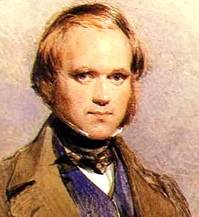 |
| Charles Darwin |
|
|
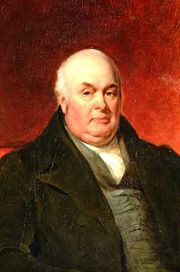
Robert Darwin |
|
|
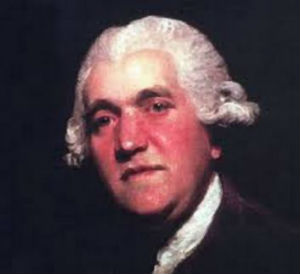
Josiah Wedgwood |

|
|
Maer Hall — Residence of Josiah Wedgwood II and childhood home of Darwin's wife, Emma. (click to enlarge) Photo: Geoff Pick |

Charles Darwin was a wealthy gentleman naturalist, and his status as a gentleman did more to shape his theory than most people realize. His social standing not only allowed him the time and leisure to create and promote his theory, but also fundamentally influenced how it developed.
Darwin's father was a wealthy physician, his mother, a daughter of Josiah Wedgwood, one of the richest industrialists in England. Moreover, by wedding his first cousin, Emma Wedgwood, Josiah's daughter, he secured a double-barreled inheritance of the Wedgwood fortune.
Married, Charles and Emma lived in aristocratic style with a full staff of servants. Darwin's biographers, Desmond and Moore (1991, p. 282), say,
It was in this non-egalitarian setting that Darwinian theory took shape.
Darwin was so wealthy that he could spend his time just as he pleased. Since he had no need for a university appointment or any other type of job, he never engaged in graduate studies. Nor was he obliged — since he was not an academic — to consider the opinion of senior, conservative faculty members. His plentiful capital kept him insulated from such constraints and left him entirely free to express his thoughts on evolutionary theory. As he himself says in his autobiography, soon after arrival at Edinburgh University, ostensibly to study medicine,
As a gentleman naturalist he could afford to spend five years on an unpaid voyage around the world — with a full-time servant — or to hire workers to carry out whatever grubby and physical tasks his investigations might require. When he wanted to examine the skeleton of one of his pigeons, he had merely to instruct his manservant Parslow to boil it and clean the bones. Similarly, in his autobiography, he recalls that while a student at Cambridge,
His wealth allowed him, too, to assist younger naturalists who, in their turn, helped him when the going got rough later on. In particular, he used his influence to assist both Thomas Henry Huxley and Joseph Hooker in obtaining positions, and they both reciprocated by lending him crucial support when he needed professionals to stand by his side.
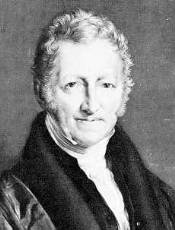
But what is most significant is the way his blue-blooded view of life shaped his theory. He differed sharply from social egalitarians of his era, and from people of humbler social origins (Desmond and Moore 1991, p. 267), in accepting the principles of the Reverend Thomas Robert Malthus. In his Essay on the Principle of Population, Malthus claimed that societal improvements only result in population growth which, he argued, sooner or later results in famine and widespread mortality. For this reason, Malthus denounced charity for the poor. Not surprisingly, this view was well-received by the capitalist-industrialist class to which Darwin-Wedgwoods belonged. It was a view that allowed the wealthy to maintain a firm grasp on their riches without suffering qualms of conscience.
|
|
Rev. Thomas Robert Malthus (1766-1834) |
But Malthus also provided the foundation of Darwin's theory. Thus, in the Origin (1859, p. 65) Darwin claims that,
Positing this universal Malthusian struggle among all the individual organisms of the earth, permitted Darwin, as Desmond and Moore (1991, p. 267) put it, to "appeal to a better class of audience" — the class of industrialists and capitalists to which he and his family belonged. Of course, it also provided him with an arena of individual competition in which natural selection could act. But he probably would not have chosen such an axiom for his theory if he had not been a member of the upper class. Certainly, a struggle of all against all is not a necessary assumption. Many types of organisms are known to be of a cooperative nature, including human beings. For example, cooperative efforts, have resulted in declining populations levels in many modern countries such as Spain. Indeed, in many cases, for the good of others, individuals forfeit their own chance to survive and reproduce. Thus, a male baboon will sacrifice its own life to protect other members of its troop from leopard attacks. This sort of altruistic behavior is something Darwinian theory does a poor job of explaining.
His social background also influenced Darwin's ideas about the pace at which evolution occurs. From youth, apparently, he believed gradualism is inherently more rational and scientific than saltational accounts of evolution. Thus, Ernst Mayr (1982: 509) comments that
"In other words," says Gruber (1974: 126),
In Darwin's day many people considered rapid change unnatural. Many, especially those of the conservative upper crust to which Darwin belonged, felt any abrupt alteration was a threat to the social order. The French Revolution had recently strengthened acceptance in England of the idea that any sudden alteration was an inherent violation of the natural order. But the notion goes far back, to days when aristocracies strove to maintain the status quo. For example, in a Middle English translation of de Deguilleville's Le Pèlerinage de la Vie Humaine, Nature (personified) describes herself:
That that I do I do bi leysure,
For I am not hastyf,
And al mutacioun that is doon in haste I hate.
(In modern English: "That that I do I do by leisure, for I am not hasty, and all mutation that is done in haste I hate.")
Anyone who opposed such views was branded a radical. Darwin seems to have harbored just such a traditional prejudice against sudden change, or at least to have been aware that many of his readers would hold such views.
It's no surprise, then, that Darwin's account of evolution does little to explain saltation, the abrupt production of new types of organisms, for example, by hybridization or polyploidy. Certainly, his theory is lacking in this respect.
|
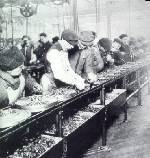
| Ford Assembly Line, 1913 |
Also, as the grandson of the great industrialist Josiah Wedgwood, one of the recognized pioneers of assembly-line methods, Darwin saw specialization of labor as the key to efficiency. He seized on the factory metaphor and asserted that any organism lacking a specialty would be outcompeted and driven to extinction by specialized ones:
Thus, evolution, as Darwin conceived it, moved from the generalized type to the specialized type. He made the world a workhouse. Progress and efficiency are important themes running throughout the Darwinian paradigm. But it is certainly questionable whether they would have been if he had not been a member of the Wedgwood clan.
This idea of specialization in evolution is strangely attractive, but it really doesn’t make sense. The analogy doesn’t work. In the world of economics, specialization confers an advantage in accomplishing some overall task. Specialized workers band together to assemble a car or construct a house and so obtain an advantage over any individual who would attempt to do the same on her own. Here, a complex task is carried out more efficiently with specialized workers. The same analogy holds with respect to the various specialized organs that make up a living being. There, the various specialized organs perform together the overall task of maintaining the organism in existence. But even if we grant that some types of organisms specialize and that some do not, it is still clear that distinct specialized types do not cooperate like factory workers to accomplish some common goal. From the standpoint of the factory metaphor, each form of life is an individual. If there is no overall task, then there is no particular advantage in specialization. It therefore seems that Darwin based an important claim of his theory on an inappropriate analogy — And yet there are so many biologists today who fail to notice this.
Thus, for someone like me, who is repelled by the rigid class structure of nineteenth century England, and by robotic factory assembly lines, who sees a value in charity and unselfish actions, Darwin seems to have been an elitist who created an elitist theory. He was a pleasant, even a charming fellow, but there is another, better way of explaining evolution. That explanation, stabilization theory, is given in full on the pages of this website.
Back to main biography page >>
Metropolis: taking the assembly-line mentality to its logical consequence:
Most shared on Macroevolution.net:
Human Origins: Are we hybrids?
On the Origins of New Forms of Life
Mammalian Hybrids
Cat-rabbit Hybrids: Fact or fiction?
Famous Biologists
Dog-cow Hybrids
Georges Cuvier: A Biography
Prothero: A Rebuttal
Branches of Biology
Dog-fox Hybrids