Home
Evolution: A New Theory
Blog
Evolution Timeline
Human Evolution
Reference: Biology Dictionary
Biology Prefixes
Biology Suffixes
Prefixes & Suffixes
Biology Roots
Fields of Biology
Famous Biologists
News Pages: Environment
Animals
Molecular Biology
Biotechnology
Marine Biology
Health
General Biology
Astrobiology
Fossils
 Help Pages: Biology Websites
Biology Journals
Mitosis Tutorial
Meiosis Tutorial
  Site Info: About this Site
About Me
Site Plan
Contact
Privacy Policy
 

1.1: On the Origin of the Word Species


Eugene M. McCarthy, Ph.D.

Section Intro
Back one page
Table of Contents
Orientation
Works Cited
Forward one page
Next Section Intro
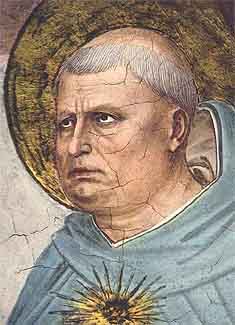
saint thomas aquinas
St. Thomas Aquinas
(1225 - 1274)
Aristotle
Aristotle
(384 BC - 322 BC)
The story of the word species (Greek εἶδος[1]) begins with Plato. According to St. Thomas Aquinas (Summa Theologica, ca. 1265-1274 A.D.),

the early philosophers, who inquired into the natures of things, thought there was nothing in the world save bodies. And because they observed that all bodies are movable, and considered them to be always in a state of flux, they were of opinion that we can have no certain knowledge of the truth of things. For what is in a continual state of flux cannot be grasped with certitude, for it passes away before the mind can form a judgment of it, according to the saying of Heraclitus, that 'it is not possible twice to touch a drop of water in a passing torrent,' as the Philosopher [i.e., Aristotle] relates.[2] After these came Plato, who, wishing to save the certitude of our knowledge of truth through the intellect, maintained that, besides these things corporeal, there is another genus of beings, separate from matter and movement, which beings he called species or ideas, by participation of which each one of these singular and sensible things is said to be either a man, or a horse, or the like. And so he said that sciences and definitions, and whatever pertains to the act of the intellect, are not referred to these sensible bodies, but to those beings immaterial and separate, so that according to this the soul does not understand these corporeal things, but the separate species of those corporeal things.[3]

As used by Aristotle, genus (γένος) and species were philosophical categories. A genus was a category and a species was a subcategory of a genus. The two terms were just as often applied to inanimate things as to living ones. For example, it would have been nothing unusual to say "house is a species of the genus building." Aristotle defined a thing by specifying its "τὸ τί ἦν εἶναι," which might be rendered in English as the "what-it-is-to-be" of that thing i.e., that which makes it what it is. (The Romans translated τὸ τί ἦν εἶναι with the word essentia, which gave rise to the English word essence.) To specify the essence of any given thing, Aristotle stated its genus and its differentia (pl. differentiae), the quality distinguishing it from others in the same genus. For example, he defined human as "a rational animal" (animal is the genus and rational, the differentia). Aristotle's system of logic was basic to the thought of the schoolmen who laid the foundations of biology in the early modern era.


Next Page >>

Table of Contents >>


1. Plato used genus and eidos interchangeably. He never used eidos in the sense of a category subordinated to the category genus (Mayr 1982: 255).
2. Metaphysics, IV, 5.
3. First Part, Q. 84, Art. I. Quoted from Hutchins (1952a: 441).

Disclaimer: Although every effort has been made to ensure the accuracy of the information presented on this website, Macroevolution.net and its maintainers cannot be held responsible for the accuracy of the information contained in the pages of this site, nor for any actions made on the basis of information provided by this website.


Species (Top of Page)
728 blank


footer for species page