On the Origins of New Forms of Life
4.8: Agamic Complexes
(Continued from the previous page)
|
|
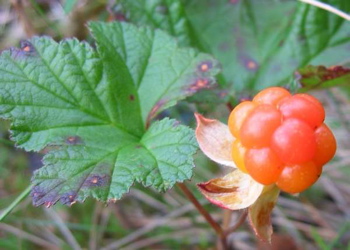
Rubus chamaemorus |
|
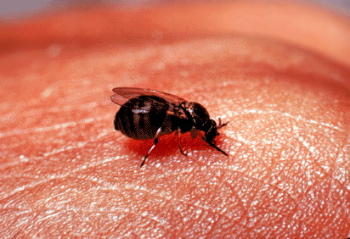
| A simuliid black fly feeding |
Agamic complexes are assemblages of multiple polyploid and agamospermous chromosets formed en masse via repeated hybridization. Coyne and Orr (2004: 18–19) note that these complexes
Grant (1981: 442–444) gives the dandelion genus Taraxacum as an example. It contains 28 sexual diploid populations treated as species, all of which can be crossed to produce hybrids. Such hybridization produces a huge variety of polyploids, most of which are agamosperms. These typically produce either bad pollen or no pollen at all, but some are capable of sexual reproduction as well. Together with the 28 core diploids, they have been treated as nearly 2,000 (!) separate species.1
Other extensive complexes of this sort occur in such plant genera as Alchemilla, Crataegus, Hieracium, and Rubus.2 The Alchemilla (lady's mantle) complex, for example, contains about 1,000 forms that have been treated as species.3 As examples of animal groups in which such assemblages occur, White (1973a: 700) mentions earthworms, weevils, simuliid flies, and brine shrimp. NEXT PAGE >>
Notes: (List of Works Cited)
1. Coyne and Orr (2004); Grant (1981: 443); Richards (1973).
2. Grant (1981), Richards (1997); Sepp and Paal (1998).
3. Sepp and Paal (1998); Walters (1986).
Most shared on Macroevolution.net:
Human Origins: Are we hybrids?
On the Origins of New Forms of Life
Mammalian Hybrids
Cat-rabbit Hybrids: Fact or fiction?
Famous Biologists
Dog-cow Hybrids
Georges Cuvier: A Biography
Prothero: A Rebuttal
Branches of Biology
Dog-fox Hybrids